
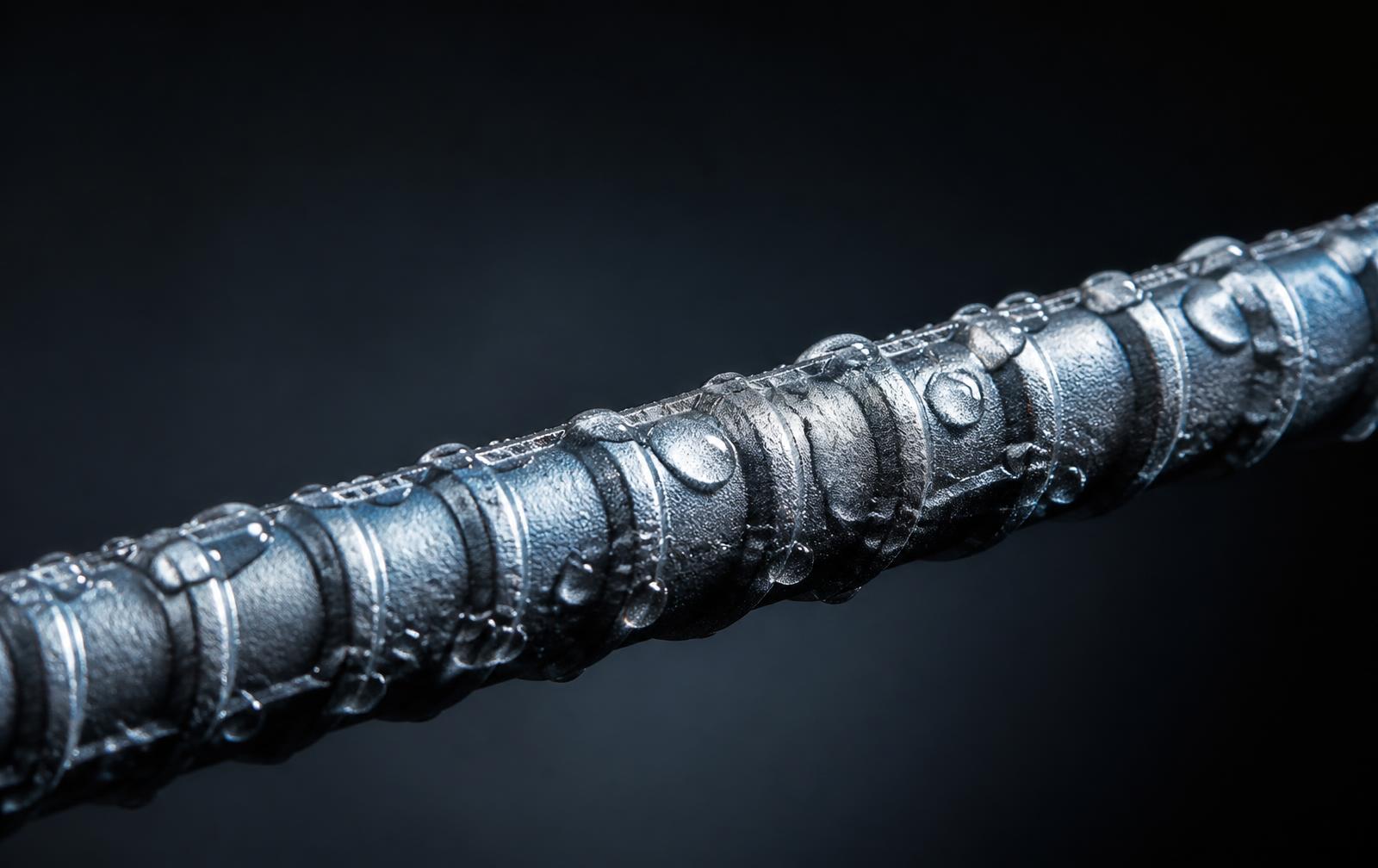
CRS technology
CRS Sariya — corrosion resistant steel
CRS steel adds controlled quantities of nickel, copper, chromium and molybdenum so the bar resists the corrosion that damages reinforcement in humid, coastal and underground concrete.
Why corrosion matters
Why reinforcement steel corrodes
Moisture, chlorides and acidic particles reach the bar through pores and cracks in the concrete cover. The corrosion product occupies more volume than the steel it replaces, so the cover cracks further and the process accelerates.
Coastal and humid air
Chloride-laden moisture penetrates cover concrete and attacks the bar surface.
Underground and water contact
Permanently wet or saline conditions keep the corrosion reaction active.
Effluent and chemical exposure
Sewage, treatment plants and industrial floors expose steel to aggressive chemistry.
Composition
The CRS alloy system
PanTMT CRS uses a controlled combination of alloying elements alongside the base iron matrix.
Fe
Iron
Base material
Ni
Nickel
Adds flexibility and strength
Cu
Copper
Provides corrosion resistance
Cr
Chromium
Increases surface hardness and durability
Mo
Molybdenum
Enhances strength at high temperatures and improves corrosion resistance
Benefits
What CRS delivers on site
Corrosion Resistant
Does not rust easily, even in moisture, rain or coastal conditions.
Longer Life
More durable compared to normal TMT bars.
Earthquake Resistant
High tensile strength makes it safe during seismic activity.
Flexible
Can be bent or straightened without breaking.
Low Maintenance
Reduced repair and replacement costs due to rust protection.
All-Weather Use
Suitable for coastal, humid and even underground constructions.
Where it is used
CRS applications
CRS is specified where exposure conditions, not just load, decide the service life of the structure.
- Coastal construction
- Humid environments
- Underground structures
- Water infrastructure
- Sewage and treatment facilities
- Bridges
- Large infrastructure
- High-rise construction